Cancer patients shouldn't have to wait until their next visit to get help with symptoms.
Yet that's exactly what happens in most oncology practices today. A patient finishes a round of chemotherapy, goes home, and then spends days -- sometimes weeks -- managing side effects with little more than a printed handout and a nurse line that's only available during business hours.
When symptoms flare at 2 AM -- nausea, fever, unexpected pain -- the default response is a trip to the emergency room. Not because it's always necessary, but because there's nowhere else to turn.
The Gap Between Treatments
The reality of cancer care is that most of a patient's journey happens outside the clinic. Between infusions, between appointments, between scans -- that's where the real burden falls on patients and their caregivers.
This gap is where complications escalate, where anxiety compounds, and where preventable ER visits and hospital readmissions originate. It's a problem that affects patient outcomes, caregiver well-being, and the financial health of oncology practices alike.
Studies consistently show that proactive symptom management in oncology can reduce ER visits by up to 50% and cut unplanned hospitalizations significantly -- yet most practices lack the tools to deliver it at scale.
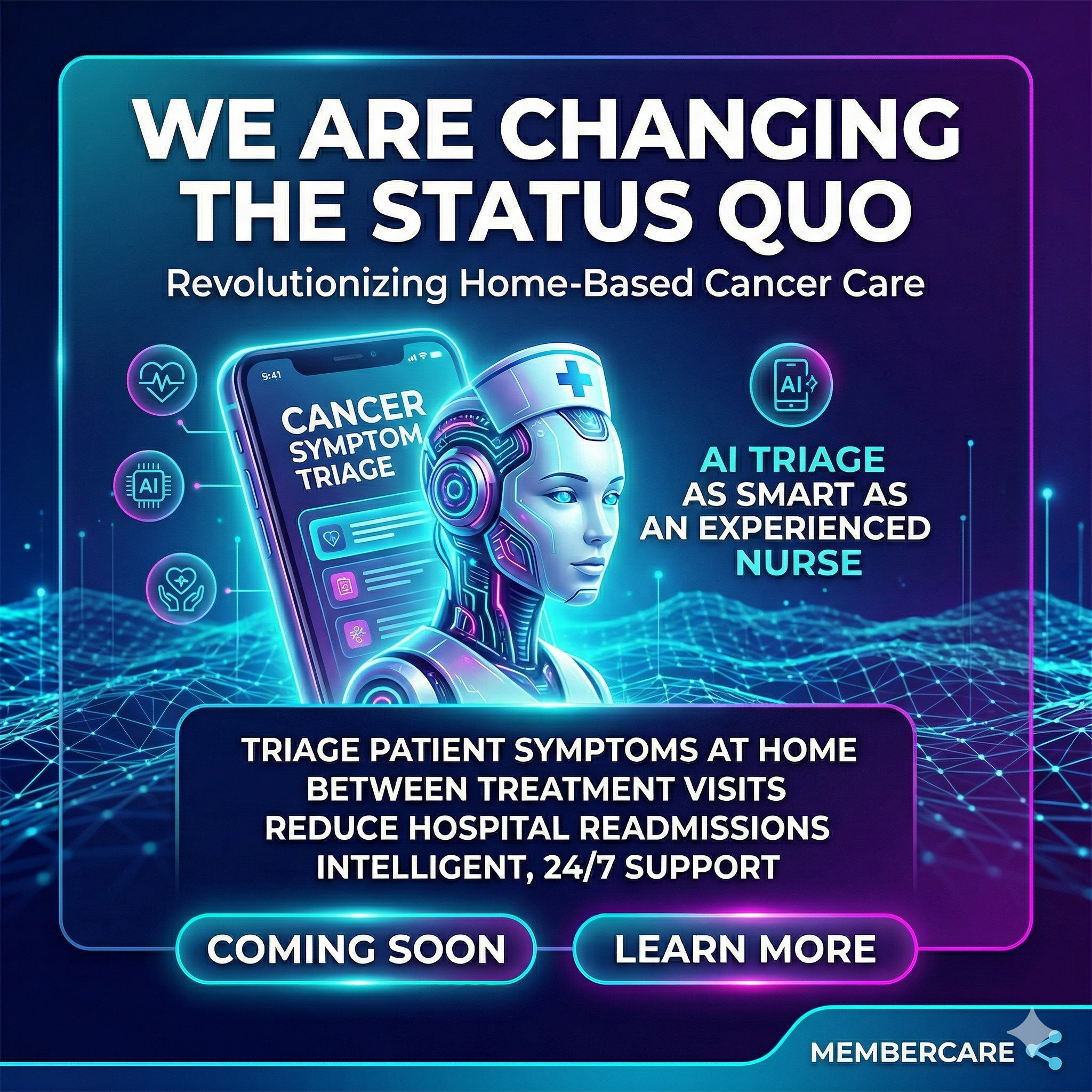
AI Triage as Smart as an Experienced Nurse
At MemberCare, we're building something different: AI-powered symptom triage that doesn't just respond to patients -- it understands them in the context of their specific treatment.
This isn't a generic chatbot that gives the same answer regardless of whether a patient is on FOLFOX or pembrolizumab. Our AI agents are trained on regimen-specific clinical knowledge -- the same knowledge base that an experienced oncology nurse draws from when triaging a call.
The system is intelligent enough to know the difference between:
- When to reassure -- mild nausea on Day 3 of FOLFOX that's expected and manageable at home
- When to advise -- specific self-care actions for symptoms that need attention but not emergency care
- When to escalate -- a fever of 100.4°F+ during neutropenia nadir that means "stop everything and go to the ER immediately"
What This Means for Patients and Practices
This Is What the Future Looks Like
The future of home-based cancer care isn't about replacing the care team -- it's about extending their reach. Giving every patient access to the kind of triage intelligence that was previously only available during a phone call with the practice's best nurse.
We believe every cancer patient deserves that level of support, regardless of when their symptoms appear or how far they live from their treatment center.
We are changing the status quo. And this is just the beginning.
Want to Learn More?
See how MemberCare's AI clinical agents are transforming oncology care delivery.
Oncology Solutions Book a Demo